Thursday, June 30, 2016

Personal Passive Income and Expenses Monthly Report - June 2016

Hi Everyone,

Finally, it is the end of June 2016, as mention in the previous monthly report post, I will be doing a summary of my passive income, expenses and savings in this blog post. With this blog post, I will be able to note down my progress every month.

So below is my report for June 2016:

Investment and Passive Income - June 2016


My investment still remains the same as compared to May 2016 as I did not make any move into purchasing or selling any shares. Understand that Brexit event would have been a good opportunity to grab some cheap shares but I didn't because I am aiming for property next year, so I will continue my investment journey after I have settled my property down payment.

My passive income in June 2016 was $136.42 which are all main from OCBC 360 interest and UOB One account interest. This is a good monthly income as it can cover my travel expenses. Certainly, for the month of July, I hope I can hit $138 (if possible).


Savings and Expenditure - June 2016


Based on the graph below, my expenses break down are as below:

1) Travel: $120 (Planned) VS $120 (Actual) - I bought adult concession so the amount is fixed
2) Food (Weekday): $160 (Planned) VS $97.10 (Actual)
3) Bills: $120 (Planned) VS $91.16 (Actual) 
4) Entertainment: $120 (Planned) VS $124.10 (Actual)
5) Others: $580 (Planned) VS $556.57 (Actual)

Overall: $1,100 (Planned) VS $988.93 (Actual)

Goal - June 2016

I have yet to achieve any goal for this year yet.


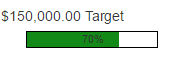
150K progress - June 2016

As of now, my savings is around 70%. 30 more percent to go before I hit my target! Wish me luck!


Conclusion - June 2016

This is a good result whereby my entertainment target was the only one that exceed the planned target. However, the overall expenses still within $1,000. This is indeed a good goal for me and I am really happy about it. Of course, I did not included my wedding expenses as I have already set a side the amount that I needed for wedding. 

My passive income was also doing a good job of having $136.42, which practically covers my travel expenses as well as some of my food expenses. I hope by the end of this year, I could hit $150 per month for my passive income.

As of now, I have yet to hit any of the goal that I have set for myself, I am getting worried because the year is ending soon yet I have not accomplished any of my goal that I have set for myself. Well have to see next month then!

Tuesday, June 28, 2016

WHICH CREDIT CARD IS THE BEST FOR OVERSEAS DINING?

Hi Everyone!

Today is another article from SingSaver which is about which credit card is the best for overseas dinning. So if you are a frequent traveler, do check this article out!


Here are 5 credit cards in Singapore that can save you serious cash when dining at major cities around the world. Traveling to a major city in Europe, Australia or North America? Expect to spend hundreds of dollars on food alone. Unlike Singapore, most Western cities don’t have an equivalent of a hawker centre. To buy a really cheap meal, you have to eat greasy fast food or dine by the sidewalk. So if you want to eat well without spending a fortune, you have two choices: hunt for vouchers like a maniac, or use a dining credit card that gives rebates abroad. We’ve rounded up a few credit cards that you can use to earn cashback on overseas dining. Can you spot which one saves you the most money?

Cashback Earned on S$500 Dining Spend in New York*
Credit Card
Dining Cashback Rate
Cashback Earned**
Monthly Cashback Cap
Minimum Monthly Spend
8%
S$25
S$25 on dining
S$888
8% on weekends, 3% on weekdays
S$25 (S$9 weekday, S$16 weekend)
S$60
S$600
5%
S$25
None
None
OCBC 365 Card
3% dining worldwide
S$15
S$80
S$600
CIMB Visa Signature
10%
S$50
S$60
S$500 plus a minimum spend of 8 dining transactions worth S$30 or more within the same statement month


*Assume S$300 weekday spend, S$200 weekend spend. **Credit card terms and conditions apply.
Winner: CIMB Visa Signature Card
If you’re after a credit card specifically for overseas dining rebates, the CIMB Visa Signature is our top pick. With a high 10% earn rate on dining, you can quickly maximise the S$60 monthly cashback limit during a one-week trip. However, earning the cashback is not as straightforward as swiping your card. First, you must spend S$500 on your card a month, and you need to make 8 dining transactions worth S$30+ each within that statement period. But given that the average price of a restaurant meal is around S$48 in a city like New York, meeting these conditions shouldn’t be a problem. The CIMB Visa Signature also has a couple of useful features you can use in Singapore, including a 10% cash rebate on online spend in foreign currencies, 0% instalment plans for up to 20 months, and no annual fees for life. It also has no administrative fee on foreign currency transactions, which is really useful for travel or online shopping. Compared to other cards, however, it’s quite lacking in terms of local dining and retail deals. But the generous rebates and privileges more than make up for it.
1. Citi Cash Back Card
This all-around cashback credit card offers 8% rebate for dining, groceries, and petrol with a minimum spend of S$888 a month. It’s a generous amount, but rebates for each category is capped at S$25 per month. This means that at any given month, S$25 is the most rebate you’ll earn for dining on holiday. However, you can also use the Citi Cash Back Card to earn rebates at supermarkets worldwide. So if you’re crashing at an Airbnb or have access to a kitchen during your trip, consider cooking your own meals. You’ll save so much money this way, and get an extra S$25 cashback too!
2. UOB YOLO Card
The UOB YOLO Card has a number of great dining deals in Singapore, but how does it fare overseas? As it turns out, its dining rebates let you save quite a bit when you travel. Earn 3% rebate on weekday dining and entertainment. And until 30 September 2016, the UOB YOLO Card gives up to 8% rebate on weekend dining and entertainment. If you’re chasing overseas dining rebates alone, the UOB YOLO Card is a better choice for weekend getaways. As you can see from the table above, you don’t earn much from weekday dining. However, the UOB YOLO Card also cuts down on travel expenses beyond restaurant meals. Cardmembers get a 3% rebate on online bookings at Agoda, Airbnb, Jetstar, and a number of travel websites. Check out the full list here.
3. ANZ Optimum World MasterCard
The ANZ Optimum World MasterCard is a powerful piece of plastic. Its rotating cashback feature lets you decide where your savings should go. It’s as simple as choosing one out of four categories at the beginning of each quarter: dining & leisure, travel, shopping, and groceries. You get 5% cashback on that category, and 1% cashback on all other spend. Maximise the overseas dining rebates by choosing the dining category during the quarter you’ll be traveling. Let’s say you’ll be at Melbourne during 15 – 25 August, and your dining expenses add up to S$500. If you choose the dining category before the 25th of July (the start of the third quarter), you earn S$25 cashback. But if you forget to declare your chosen category, you only get S$5 cashback.
4. OCBC 365 Card
The OCBC 365 might have the smallest overseas dining rebate of all the cards in this list. However, it can net you a whole lot of savings while in Singapore. At S$80 maximum cashback per month, the OCBC 365 Card has one of the highest cashback limits in the market. You can use it to get 3% rebate on online travel bookings, plus 6% rebate on Singapore dining and 3% rebates on groceries island-wide. The OCBC 365 Card also gives you access to the Visa Luxury Hotel Collection. Card members get preferential rates for the best hotels and resorts around the world, plus perks like automatic room upgrade upon arrival and complimentary breakfast!

Saturday, June 25, 2016

Understand Yourself Before Starting Saving/Investment Journey

Hi Everyone!

Today's topic is about understanding yourself before you start your investment/saving journey. This is important because it can greatly affect your portfolio and the returns that you can generate.

These are some of the questions that you can asked yourself or make sure that you know about yourself before getting started.

1. Is Your Determination Strong Enough To Complete Every Task?


This question is important because financial saving/investment requires determination before you can reach that financial goal of yours. The reason is because in order to reach the financial goal via saving/investment, you would need to give up some of the excessive lifestyle that you are currently enjoying in order to save up some money to build your first pot of gold.

Initially, you might be able to have some determination to work towards that, but maybe few months down the road, you might think otherwise. You will feel that you are tired of saving money, tracking your own expenses and etc, which eventually goes back to your normal lifestyle where you spend or overspend the money that you earn for each month.


So determination is very important so to ensure that you won't give up half way. Personally, I have been through that stage before whereby I was too lazy to keep track of my own expenses for about 2 months, and after which when I resume on tracking my expenses (without any changes in my daily spending), I actually spend more than what I should have. So I quickly set myself a target, goal and expenses tracking website to ensure that such things will not happen. 


2. Risk Appetite

There are tons of investment/saving tools out in the market whereby you can make your money work for you to earn more returns. So you will have to asked yourself, what is your risk appetite. 

For low risk, you can go for banks with high saving interest like OCBC 360, UOB One or BOC, together with SSB, STI ETF, CPF Top Up and probably fixed deposit.

For high risk, you can go for tradings, invest in shares, FX and etc. 

So it really depend on your risk appetite. However, if you are new to investment, do not go all in at the very first time, set some amount that you can lose and try it out first before increasing the limit of your money. If not, you might lose all your money at one shot.

3. Lazy or Hardworking

Depends on whether you are hardworking or lazy. If you are hardworking, it would be best for yourself to manage your own portfolio. However, if you are lazy, then it would be best to get one agent, middleman or fund manager to handle your money for you. 

The reason is because monitoring your portfolio can take up a lot of your time which makes you have lesser time to slack around in the house, even during your weekends. So if you do not have such time for monitoring, it would be best to ask a middle man to manage it for you (by paying them some commission or price - depending on what you buy, could be insurance saving plan, STI EFT and etc.)


So these are the three things I find that it is important to asked yourself before you start your saving/investment journey. So what is your view about this? Do comment below!

Friday, June 24, 2016

HOW TO ESCAPE LIVING PAYCHEQUE TO PAYCHEQUE IN SINGAPORE

Hi Everyone!

For most salary-man (employee), there are certain date that we are certainly happy about, which is the date where we receive our salary! That's because we will have money to do whatever we want. However, as a financial blogger, there are some things that we certainly have to look out for when we receive our paycheck. One of the thing is living paycheck to paycheck. Although most people might view this as quite common and perceive as not as harmful as they will still get their paycheck next month, but the consequences will surface when one loses their job.

So I have decide to publish this article from SingSaver, which I think is a good way to break the living paycheck to paycheck habit.


Living paycheque to paycheque is not only stressful – it’s dangerous. Here’s how to stop and turn your finances around. If your paycheque seems to vanish as soon as it arrives, and you find yourself surviving on Maggi mee toward the end of the month – you have a problem. Specifically, you’re living paycheque to paycheque. Not only is it stressful; it’s dangerous. A single emergency, such as retrenchment, will send you neck deep in debt. Here’s how to break the habit:


1. Always Pay Yourself First 

Before you start spending your money, make sure 20 per cent goes into your savings. We know the CPF does this for you already, but you can’t take out your CPF money easily. It’s important to have an emergency fund that you can tap into when you need. So the moment you get your pay, take 20 per cent and put it in a separate savings account. You’ll want to keep doing this until you accumulate six months worth of savings (however long that takes). Having an emergency fund means you won’t need to resort to loans in a crisis. It also gives you the confidence to make critical decisions, such as switching jobs or starting up a small side-business. 


2. Reduce Your Loan Interest 

If you find that almost all your money goes into repaying loans, it’s time to reduce the interest rates. One simple way to do this is to use a balance transfer to pay off a credit card completely, or to use a personal instalment loan to pay off higher interest debts. For example: Say you owe $5,000 on a credit card, which has an interest rate of 24 per cent per annum. You could take a personal instalment loan for S$5,000, at just six per cent per annum. You then pay off the credit card with the personal loan. This would effectively reduce your interest rate from 24 per cent to just six per cent. If you use a balance transfer, you might be able to get deals that reduce your debt to zero per cent interest for six months. This makes it considerably easier to pay off the amount owed. You can find the best balance transfer options on SingSaver.com.sg. You should stop using a credit card or credit line after making a balance transfer to pay it off, or using a loan to do so. 


3. Find an Expense Tracking Method That Works For You 

What gets measured gets managed. If you track your expenses, you are less likely to overspend. Here’s the tricky part: the same tracking method won’t work for everyone. For some of us, having an Excel spreadsheet does the trick; the rest of us need methods such as sticky notes or phone apps. Experiment with the methods available, from writing things down to using phone apps. Stick to the one that feels most intuitive. This is the first step to developing a functional budget. Which leads to the next issue. 


4. You Need a Budget, But Forget the Rigid Methods 

The easiest and most effective way to budget is to deduct 20 per cent of a particular expense. For example, if you spend S$1,200 a month on food, see if you can cut it down to S$960. Do this by setting aside $960 in your food budget, and then storing the excess S$240 in savings. You are free to spend the S$960 on food any way you choose – but when you run out, you’ve run out. No cheating and tapping your savings to pay for more. This method is usually more effective than trying to plan out the dollar value of each and every meal. Because we are human beings and not companies, it is not natural for most of us to stick to corporate-style budgets, where the exact amount of each expense is predetermined. Try to use this method for two or three categories in which you spend the most (e.g. food, travel, and clothes). If you fail to keep the budget in one, you may still succeed with the others. 


5. Stop Automating Payments 

If you have automated payments, such as for gym memberships, MMORPG subscriptions, or clubs, we suggest you cut them off. You should always be aware of what you’re paying, and how much you’re paying for them. This will remind you to stop forking out money for services or goods you don’t actually need. On the other hand, you do want to automate your savings if possible. The reason your CPF seems so huge is because the 20 per cent is deducted for you – out of sight, out of mind. 


6. Tighten Your Belt the First Week You Receive Your Pay 

Make a pledge to do minimal to no shopping, on the very first week you receive your pay. The only thing you should do that week is transfer money into your savings account and repay any due debts. This will help to break the habit of overspending in the first week, and then needing loans or credit to get you through the rest of the month. It will also prevent you from needing an advance, something that employers look on negatively as it affects their payment process. 


7. Let Someone Else Do the Shopping 

As a last resort, if you truly cannot control your spending, consider letting someone else do the shopping. Get a spouse, parent, or close friend who is willing to help, and give them a fixed shopping list. Pass them the cash to do the shopping for you, so you don’t get tempted. You can still indulge in the occasional bit of shopping. During the LAST week of the month, if you have a surplus, you may take the money and go shopping yourself. However, you should not bring any credit cards, lest you be tempted to rack up debt.

So what is your view on living paycheck to paycheck? Does this article help you? Or do you have even better idea to break this habit? Do comment below!